
Dehydrating Elderberries: Preserving Winter Medicine the Slow Way
Elderberries have long been treasured as one of nature’s most powerful winter allies. This year, after making a fresh batch of elderberry syrup, I chose to dehydrate the remaining berries — creating a shelf-stable medicine I can return to whenever our bodies need support.
Drying elderberries is a simple, ancient way of preserving their goodness while keeping your options open: syrup now, oxymel later, tea when needed.
🌑 Why Elderberries Are So Valued
Elderberries are especially known for their support of:
Immune health
Lung and respiratory function
Cold and flu recovery
Inflammation and circulation
One of my favourite observations is how elderberry clusters resemble lung alveoli — the tiny air sacs in our lungs. This visual echo is a beautiful reminder of the plant’s traditional association with respiratory health.
(You can see this reflected clearly in my reel showing the elderberry clusters and their lung-like form.)
Nature often speaks in patterns if we slow down enough to notice.
🌿 Why Dehydrate Elderberries?
Dehydrating elderberries allows you to:
Preserve them long-term without freezing
Save space and avoid spoilage
Make syrup, oxymel, or tea as needed
Reduce waste during peak harvest
Instead of committing all berries to one preparation, drying them keeps your options open — a very practical form of slow living.
🔥 How to Dehydrate Elderberries
You’ll need:
Fresh, ripe elderberries (removed from stems)
A dehydrator or oven on very low heat
Method:
Carefully remove berries from stems (stems can be toxic — take your time here).
Rinse gently and pat dry.
Spread berries in a single layer on dehydrator trays.
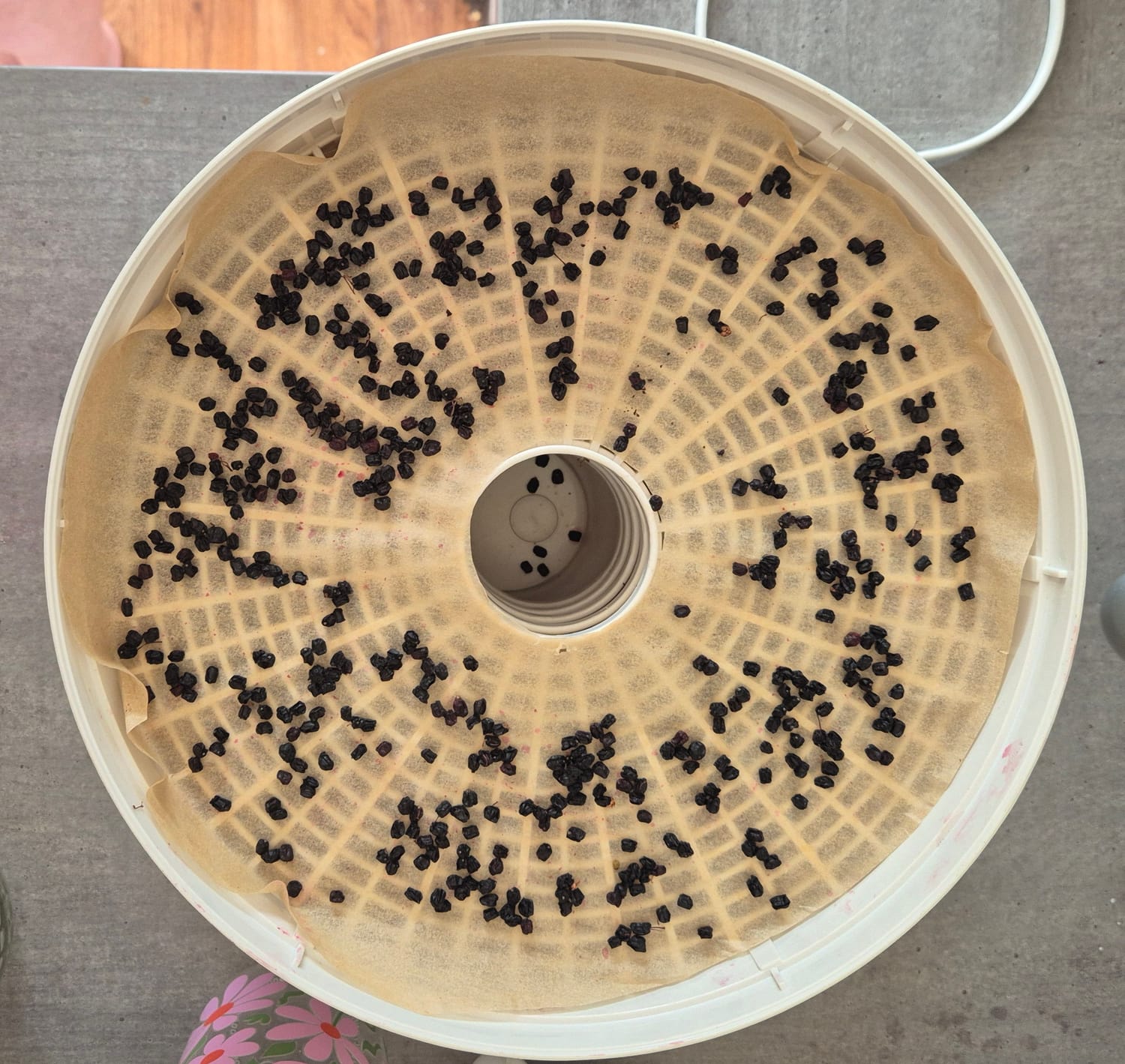
Dehydrate at 40–45°C (104–113°F) for 12–24 hours, until fully dry and slightly wrinkled.
If using an oven, set to the lowest temperature with the door slightly ajar.
Allow to cool completely before storing.
Fully dried elderberries should feel firm and dry, not sticky or soft.
(My second reel shows exactly what properly dried elderberries look like.)
How I’ll Use Them Through Winter
Now that they’re dried, these elderberries will become:
Elderberry syrup — small batches as needed
Elderberry oxymel — perfect for sore throats and coughs
Immune-supporting teas
Drying allows the medicine to meet us when we need it — not all at once, but slowly, intentionally.
🌱 A Note on Respect & Safety
Elderberries should always be cooked or dried before use. Never consume them raw.
Harvest only from clean areas, and always be certain of plant identification.
🌿 Closing Thoughts
Preserving elderberries isn’t just about medicine — it’s about relationship.
Paying attention.
Honouring what the season offers.
And storing a little summer strength for winter days ahead.
Nature gives.
We learn to listen.
Created with ©systeme.io• Privacy Policy • Terms and Conditions