
Why Does My Sourdough Focaccia Look Uncooked Inside? (And How to Fix It)
If you’ve ever sliced into a beautiful sourdough focaccia only to find the inside looking dense, glossy, or slightly gummy, you’re not alone. This is one of the most common questions home bakers ask — and the good news is: it’s usually not raw.
What you’re seeing is a crumb that hasn’t quite set yet. With a few small adjustments, your focaccia can go from dense and shiny to soft, airy, and pillowy.
Let’s break it down.
First things first: is it actually uncooked?
Most of the time, no.
An uncooked loaf will look floury, wet, or doughy. What many sourdough bakers experience instead is a custardy or translucent crumb, which points to fermentation or baking issues rather than raw dough.
This distinction matters — because it means you’re very close to getting it right.
The most common reasons sourdough focaccia turns out dense inside
1. Under-fermentation
Sourdough focaccia often needs more fermentation time than you expect.
Even if the surface looks bubbly, the inside may not yet have enough structure to trap gas evenly. This leads to dense patches mixed with large tunnels.
What to look for instead:
Dough that has expanded by about 50–75%
A jiggly, aerated feel
A soft dome rather than a flat surface
Time matters more than the clock — temperature, starter strength, and flour all affect fermentation speed.
2. High hydration without enough gluten strength
Focaccia is a wet dough by design, but sourdough needs gluten strength to support that moisture.
If gluten isn’t developed enough:
Water stays trapped in the crumb
The interior looks shiny or gummy
Air pockets form unevenly
Helpful fix:
Add one or two extra stretch-and-folds or a coil fold during bulk fermentation, allowing proper rest time between folds so the gluten can actually develop.
3. Oven temperature too low
Focaccia needs heat — real heat — to set the crumb before it steams itself dense.
If the oven is too cool:
The outside browns too fast
The inside stays soft and under-set
Ideal baking conditions:
Oven temperature: 220–230°C (430–450°F)
Use a metal tray for better heat transfer
Bake until the bottom is deeply golden, not just lightly coloured
Internal temperature should reach around 96–98°C (205–208°F)
4. Cutting too soon
This one surprises a lot of people.
When focaccia is sliced while hot, steam gets trapped inside, making the crumb appear gummy even if it’s fully baked.
Solution:
Let your focaccia cool for at least 45 minutes before slicing. This allows moisture to redistribute and the crumb to finish setting.
The Takeaway
If your sourdough focaccia looks dense or glossy inside, it doesn’t mean you failed — it means your dough needs a little more time, a little more strength, or a little more heat.
These are refinement tweaks, not mistakes.
Baking sourdough is a conversation with your dough. Once you learn to read the cues — jiggle, rise, texture, and colour — everything changes.
And trust this: you’re closer than you think 🌿
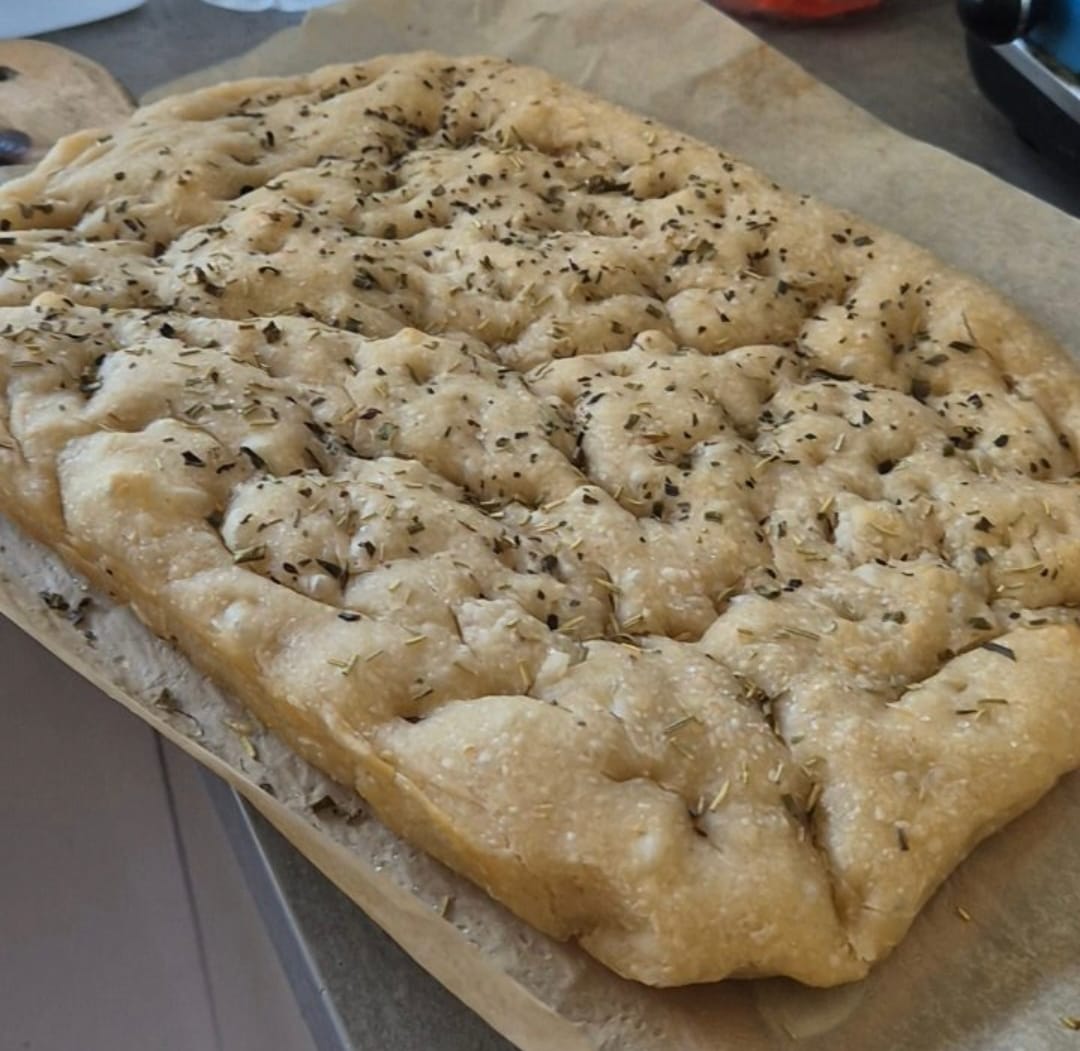
Here's an Instagram post that talks about this journey too :)
Want to Learn Sourdough from the Beginning?
If you’d like to bake your own sourdough — starting with a healthy, resilient starter — I’ve created a step-by-step sourdough starter course to guide you gently through the process.
It’s designed for:
beginners
busy households
people who want to work with sourdough, not feel intimidated by it
👉 You can grab the course here and start your sourdough journey with confidence.
Because sourdough isn’t about perfection.
It’s about learning, observing, and feeding more than just your body 🌱
Created with ©systeme.io• Privacy Policy • Terms and Conditions